World cafe on migration
Download the methods
To download the methods, click here
Target group
No. of pax
Environment
Time needed
Materials
• Post-its
• Markers
• Pencils
• Flipcharts
• A board
Objective/aim
The activity aims to share and integrate as many different views and perspectives on migration as possible, with the participation of all participants, and to bring them together.
Step by step instructions
Preparation
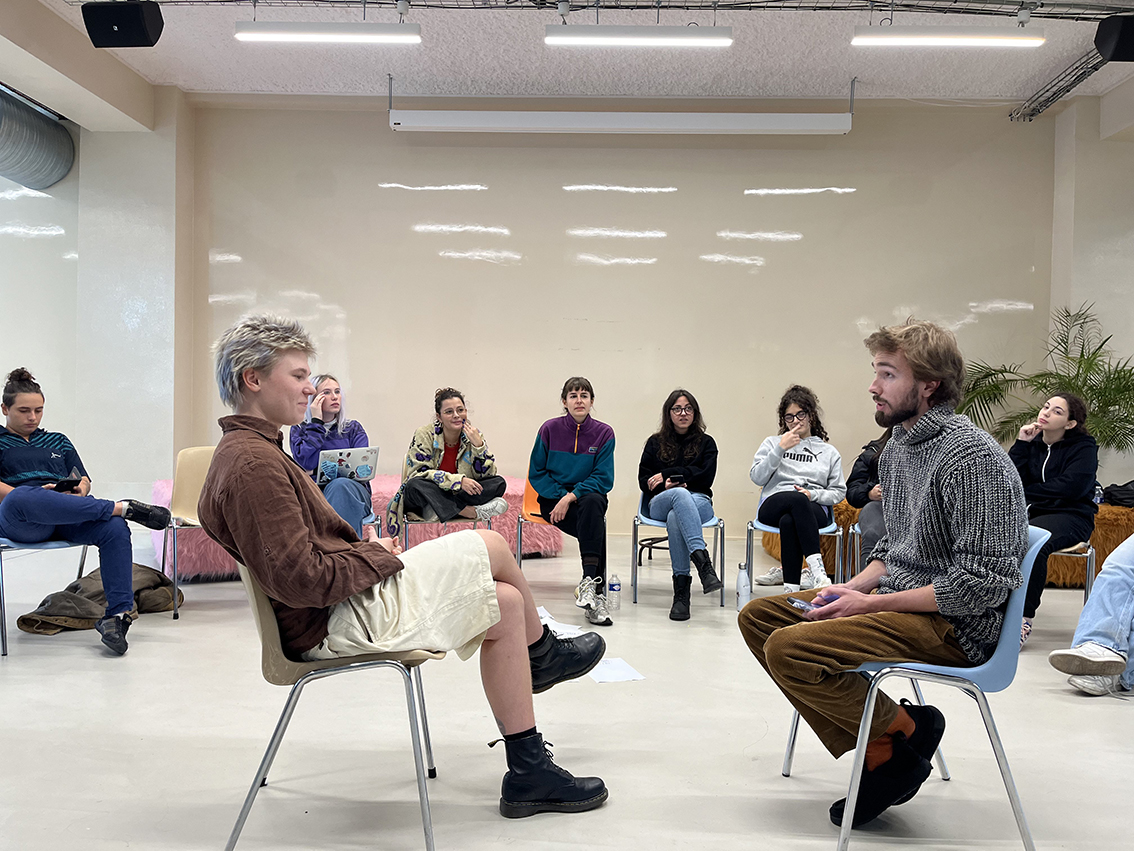
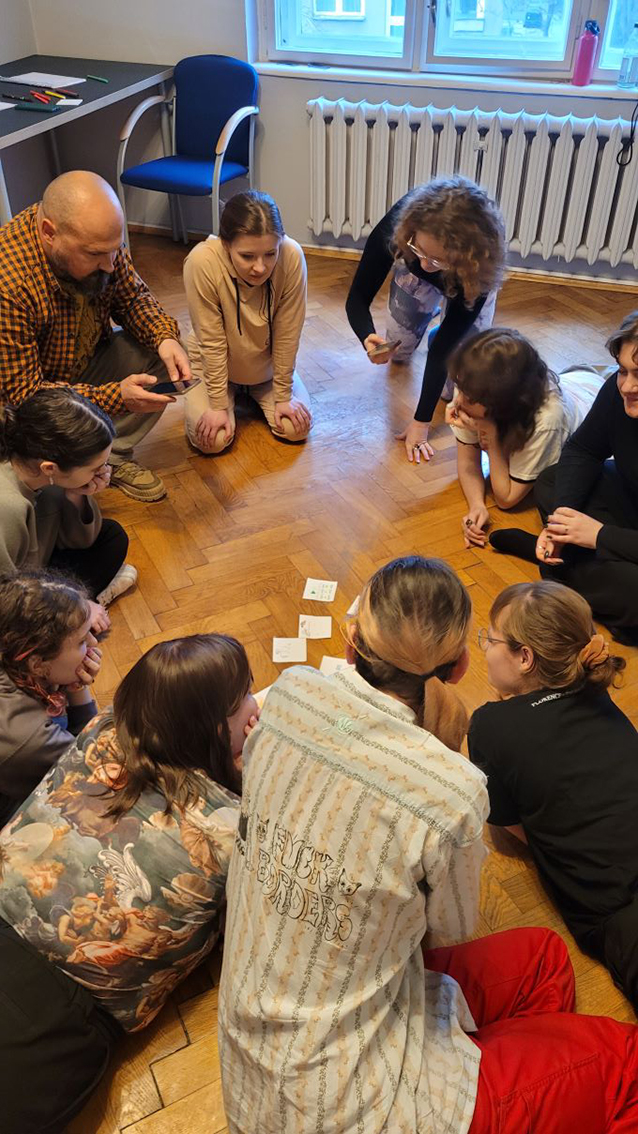
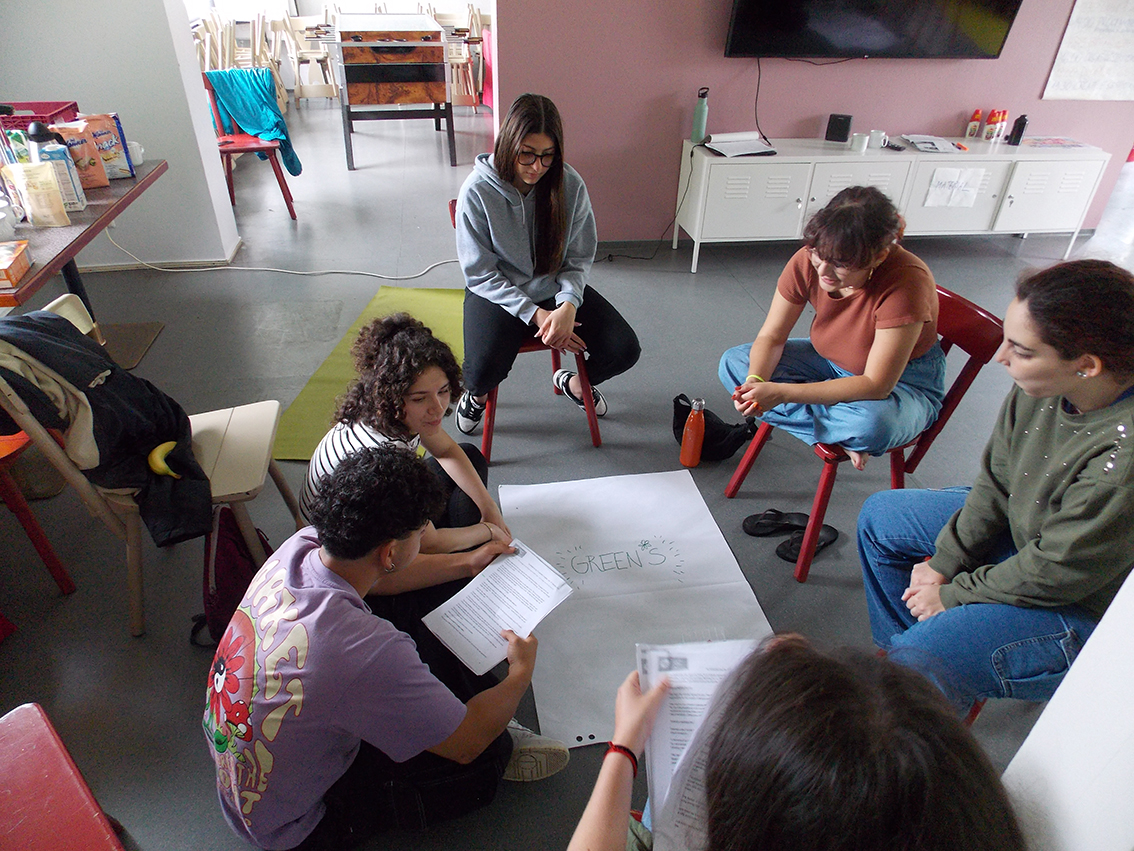
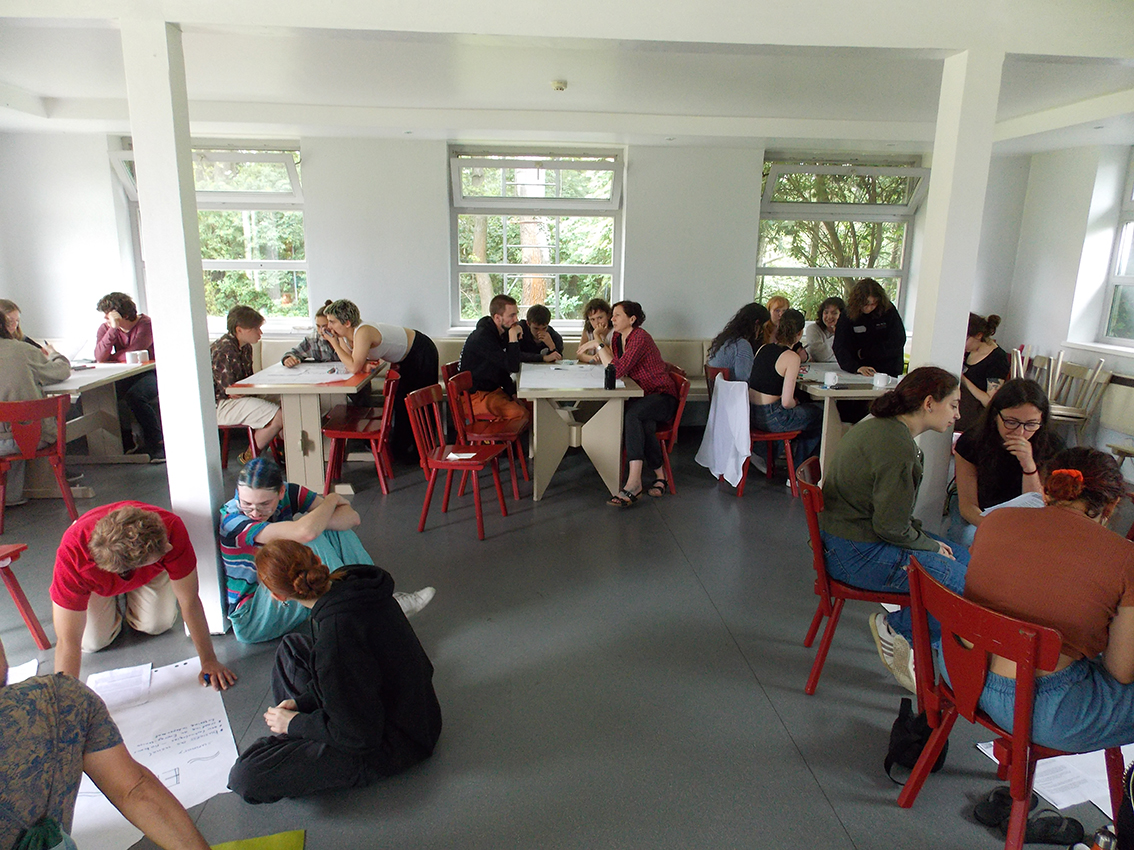
The whole space is set up like a café. Participants form groups of four to six people (depending on the number of participants) around the tables; each table has paper and pens.
Step 1
For each table, you need one participant to act as a volunteer table host/facilitator (it is helpful if they already have some facilitation skills). Their role is to ensure an open, clear and respectful conversation. The hosts always remain at their table while other participants change tables. In each round, the hosts summarise the main ideas and key findings of the previous rounds for the new participants. At the end of the process, they summarise the key findings reached at their table.
Step 2
Divide the participants into several groups according to the number of tables and assign each group to their table. (10 min)
Step 3
Ask an introductory question on migration. All questions should be written on the board in the middle of the room or printed on cards on the table; in any case, they should be visible to all.
Possible questions:
• What are the reasons for people leaving their place of origin?
• Do you think this has changed throughout history? If so, how?
The tables record their cues, thoughts, and introductions on a large sheet of paper or a board. The trainer should move around the tables during the discussion to encourage participation and debate.
Step 4
Signal that the first round is over and ask participants (except the hosts) to move to a new table. Continue with further rounds of discussion.
Possible questions for each round:
• In what ways can people who arrive in a new environment influence it?
• In what ways does the new environment influence the people who enter it?
• What are the challenges of migration? (for the people who migrate and for the environment they arrive to)
• What are the opportunities that migration presents? (for the people who migrate and for the environment they arrive to)
• In what ways could we create and ensure peaceful, fruitful and mutually understanding coexistence between migrants and their new environment?
Step 5
Reflection phase
The hosts are given five minutes to summarise the findings of their tables. Then ask participants if there is anything they would like to clarify or change, and explain what will happen with the World Café results (e.g. the pooling of ideas and insights and in-depth analysis). Then, thank participants for their participation and officially close the World Café. (25 min)
Tips for the trainer
For a real café atmosphere, there may be drinks, biscuits, flowers, etc. on the table.
Timekeeping is an important thing – having an extra person to watch time is very helpful.
It is also useful to have a bell or some other tool with which you can announce the time to change the table
Alternative
You can change the questions or adapt them to the level of the age group. You can also use the methods for a different topic you want to address.
In this project, we worked on the 2024 European Parliament elections and held an additional session ahead of the World Café focusing on the party groups’ election programmes.
If you are also working with young people on elections, you can adapt this method as follows:
Print out all the election programmes of all running parties or party groups concerning a specific topic. Some parties might have ten pages on it, while others might not even mention it or only include a single sentence. Prepare the prints on different tables in the room with a clear marking of which party’s programme it is.
Then, divide the participants into smaller groups and assign each group to work on a specific party’s programme.
The first question for them is to summarise the party’s demands on that specific topic.
In the next step, they should discuss together what they think about it, if they agree/do not agree with those demands, or what might be missing.
In the third step, they can make their own suggestions.
Instead of the third step, you can also open up into a more general World Café discussion on the same topic as described here. In the end, the groups can present their work to the others, so everyone gets an insight into the different election programmes and a critical reflection about them. It is important to make space for critical discussions on the demands and programmes and clarify terms if needed.
Comment
Source
Adapted from
User participation: https://www.user-participation.eu/sl/nacrtovanje-procesa/5-korak-participativne-metode/nacrtovanje-prihodnosti-vizije-strategije-projekti/svetovna-kavarna
Društvo moderatorjev Slovenije (SLOVENIAN ASSOCIATION OF FACILITATORS): https://drustvo-moderatorjev.si/o-moderiranju/primeri-iz-prakse/svetovna-kavarna/